
TDCJ-CID McMullen Case Scope
TDCJ becomes relevant after a court commits a person to Texas state custody. An ordinary McMullen bond release, county sentence, or local probation case is not a TDCJ-CID release. A person transferred from a county housing jail to TDCJ has left that jail but remains incarcerated. Describe the move as a transfer, not a community release.
No TDCJ prison was identified in McMullen County. State prisoners are assigned to units based on classification and system needs, not county lines. A McMullen conviction can therefore lead to a unit elsewhere in Texas. Search the individual record for the current unit, then confirm any later scheduled release location.
| Custody event | Correct source | What it means |
|---|---|---|
| McMullen county booking | Sheriff, housing jail, and clerk | Local pretrial or county custody |
| Transfer into TDCJ | TDCJ offender detail | State incarceration continues |
| Release to parole | TDCJ and Parole Division | Outside prison under state supervision |
| Mandatory supervision | TDCJ, BPP, and Parole Division | Statutory release to supervision |
| Flat discharge | TDCJ release or discharge record | State sentence ends without a remaining parole term |
Search TDCJ-CID Release Status
The official TDCJ offender search is the first state route. Use identity details that reduce same-name error. County of conviction can help distinguish records, but it does not prove current residence or release destination.
- Enter the last and first names. Add the seven-digit TDCJ number or SID number when known.
- Use sex or race only as offered to narrow the form, then compare all public identity fields.
- Open the detail and review the unit, offenses, county and court of conviction, and displayed dates.
- Separate projected release, parole eligibility, maximum sentence, scheduled release, and actual post-event status.
- If the person no longer appears, request incarceration history and release information from TDCJ records channels.
The online service is mainly a current-inmate tool and may not serve as a complete archive of all former prisoners. A missing result does not prove that the person was never in TDCJ. Use the TDCJ inmate-information request with full name, TDCJ number, or date of birth and county of conviction.
The official search form was captured successfully from its TDCJ source.
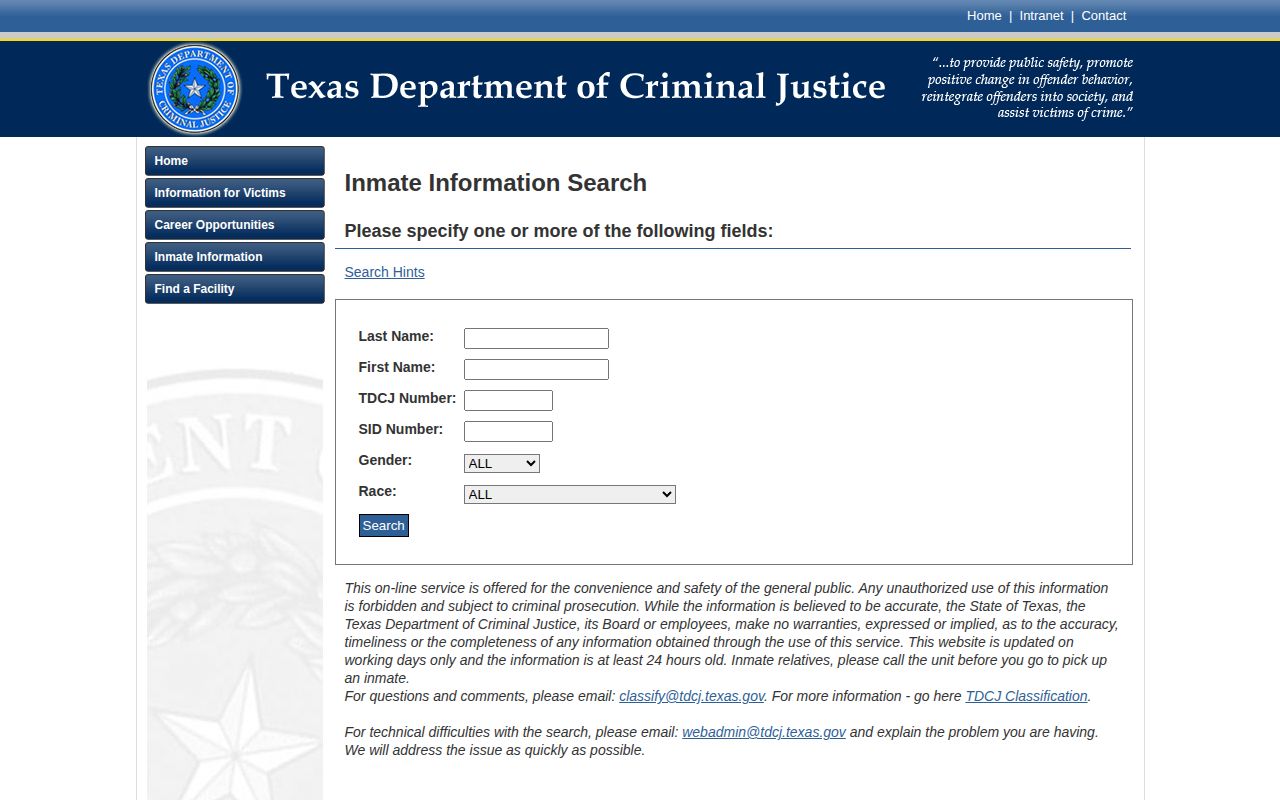
The capture shows the statewide search route. It does not prove that a named person is in custody or has been released.
TDCJ-CID Release Date Fields
TDCJ’s date labels answer different questions. A projected release date is calculated by Classification and Records and represents when the person is projected to leave incarceration if not paroled sooner. Parole eligibility is the first possible review point under applicable law, not approval. Maximum sentence date is the computed sentence endpoint. A scheduled date and location can appear after a release certificate and audit.
- Projected release date
- A state sentence-computation field that can change.
- Parole eligibility date
- A possible review threshold, not a promised hearing or release.
- Scheduled release date
- A prospective plan posted after later approval and records work.
- Scheduled release location
- The designated state release point, which may differ from the assigned unit.
- Discharge
- The end of the TDCJ sentence or supervision term reflected in state records.
TDCJ warns that a scheduled date can change without notice, even on the expected day. Sentence corrections, jail credit, disciplinary forfeiture, Board action, detainers, new cases, programs, and release-plan review can change the result. Never calculate an exact date from the sentence length alone.
The official requested-information page supplies the projected-date definition shown below.
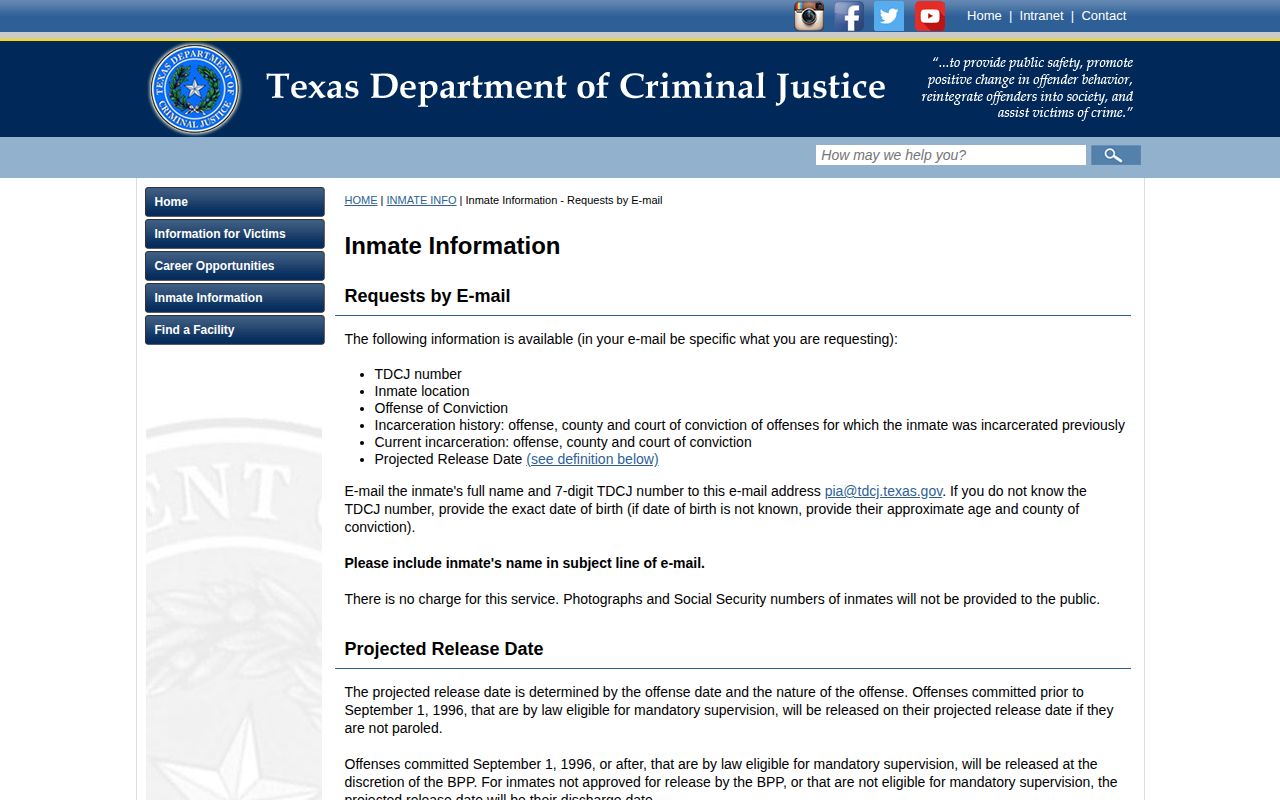
This state definition does not apply to a McMullen county-jail sentence calculation.
TDCJ-CID Release Locations
TDCJ says state-prison releases generally occur between 8 a.m. and 5 p.m., Monday through Friday excluding holidays. The agency also says release can occur from the unit of assignment or another designated unit. Family should call before travel because dates and places can change.
Some categories of male inmates, including certain detainer, sex-offender, and intensive-supervision or electronic-monitoring cases, may be released through the Huntsville Unit. That example shows why a McMullen conviction does not identify the release gate. Use the person’s current detail and direct TDCJ confirmation.
TDCJ release material discusses clothing, a possible transportation voucher, and release-payment practices. Those are state-prison provisions only. They cannot be promised for McMullen county custody. A detainer can also route the person to another custodian rather than the community.
TDCJ-CID Release Record Requests
The basic TDCJ email-information service can provide the TDCJ number, current location, offense of conviction, current and prior incarceration history, county and court of conviction, and projected release date. TDCJ says the enumerated service is free. It does not provide photographs or Social Security numbers.
For a historical release record or material outside that list, submit a focused request through the department’s Public Information Act process. Identify the person and existing record sought. Ask for release date, release type, unit, scheduled or actual location when maintained, state supervision status, and discharge data. Accept lawful redactions and request the legal basis for withheld material.
Texas Department of Criminal Justice
Inmate Information Choices
Online Offender Search
Email Information Request
The captured TDCJ inmate-information page shows the department’s official access choices.
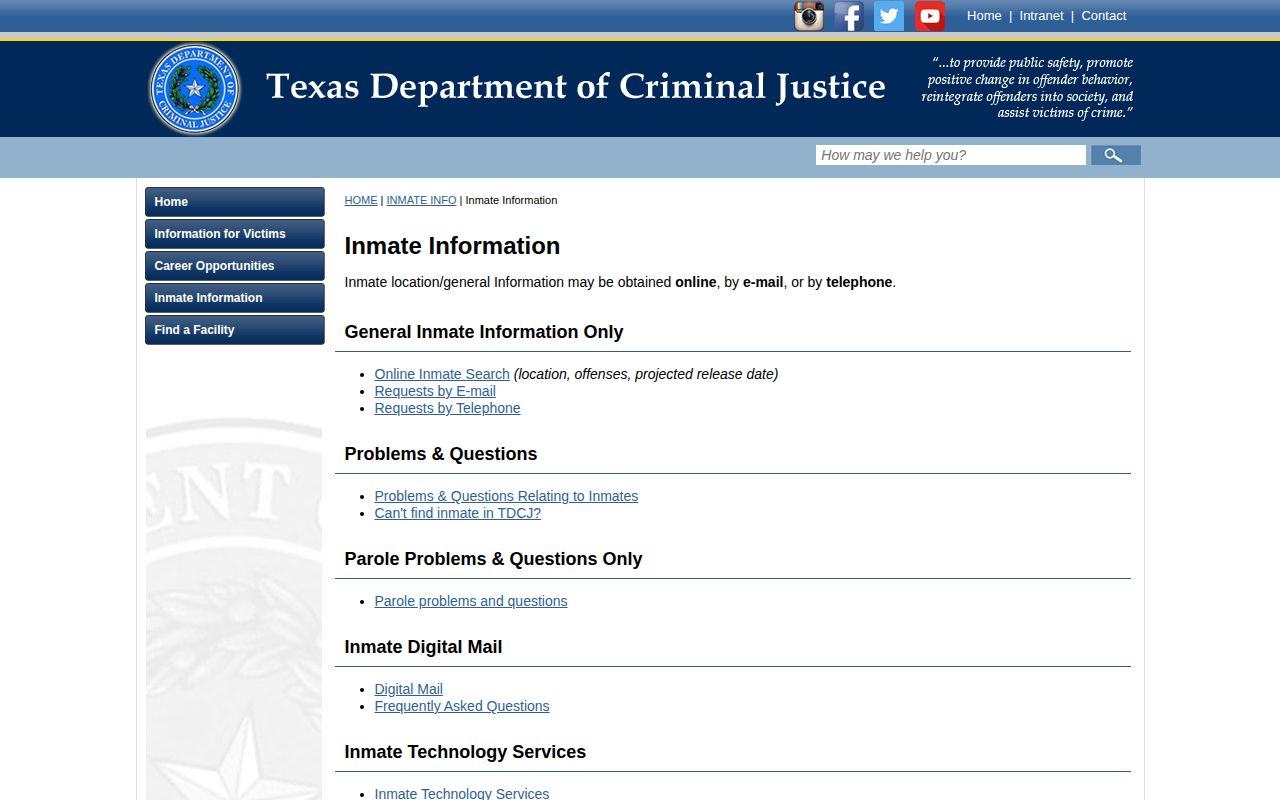
Use these channels for state custody. The Sheriff and housing jail remain the sources for a county-only episode.
TDCJ-CID Post-Release Supervision
A person outside prison can remain under TDCJ authority. The Parole Division supervises parole and mandatory-supervision releases. The Texas Board of Pardons and Paroles makes release decisions. Office assignment follows the approved residence and supervision needs, not simply the county of conviction.
Verify the TDCJ record and release type first. Then use the BPP parole-status line at 844-512-0461 and the Parole Division directory. A pre-revocation warrant or absconder status can lead to arrest and does not mean the sentence has discharged. County community supervision is a court probation path and must not be confused with state parole.
TDCJ uses a separate TDCJ IVSS for prison, parole, mandatory-supervision, release, discharge, and offered supervision events. County IVSS is not proof of a state-prison discharge. Alerts supplement, but do not replace, TDCJ records.
Confirm TDCJ-CID Actual Release
Check the detail again after the expected date and record when it was viewed. If a release is shown, distinguish release to supervision from discharge. Ask TDCJ for the post-event record when the online detail no longer appears. For parole or mandatory supervision, confirm the assigned office and present state status.
A court judgment committing a person to TDCJ explains the legal basis but not the later prison door time. The TDCJ release record controls the state event. A BOP, ICE, or USMS transfer belongs in its own federal system. The McMullen County release-record overview shows how the local and state pieces connect.
Note: Confirm the unit and release location for the individual because state assignments and scheduled plans can change.
Good-conduct time also requires the state framework. Government Code Chapter 498 makes good time a privilege rather than a right and permits forfeiture under agency rules. Chapter 508 contains offense-date and category rules for parole eligibility and mandatory supervision. Texas has no universal rule that every state prisoner must serve 85 percent. A projected date must come from TDCJ’s computation, not a shortcut applied to the sentence.
When two date fields seem to conflict, ask Classification and Records which one controls the current stage. Eligibility may precede a Board decision. A scheduled date may follow approval but remain subject to audit, detainers, program work, and a release plan. The actual post-event status answers a later question.
Texas IVSS can notify a registered user of offered state events, but the TDCJ record remains the authority for release type and discharge. Save the alert time, then verify it with the department. A state release record should not replace the Sheriff’s separate arrest or county transport record.